
Infrared Sauna vs Traditional, Which is Better?
For centuries, saunas have been used relax the body, clear the mind, and promote detoxification. But when it comes to investing in a sauna for your health and wellness routine, you may be wondering: what’s the difference between an infrared sauna and a traditional sauna? Which one is better?
Both types offer unique wellness benefits and experiences, so it’s essential to understand the differences between traditional and infrared sauna before making a decision.
|
Feature |
Infrared Sauna |
Traditional Sauna |
|---|---|---|
|
Heating Source |
Uses infrared light to heat the body directly |
Heats the air which in turn heats the body |
|
Temperature |
Between 100°F to 140°F For Health Benefits |
Between 150°F to 195°F For Health Benefits |
|
Warm-up Time |
Usually takes about 10-15 minutes |
Can take up to 30-45 minutes |
|
Moisture Level |
Dry |
Can be dry or humid (if water is poured on rocks) |
|
Health Benefits |
Deep tissue warmth, detoxification, muscle relaxation |
Detoxification, improved circulation, skin cleansing |
|
Energy Consumption |
Generally consumes less energy |
Can consume more energy due to higher temperatures |
Heat Source: The Primary Difference Between Traditional and Infrared Saunas
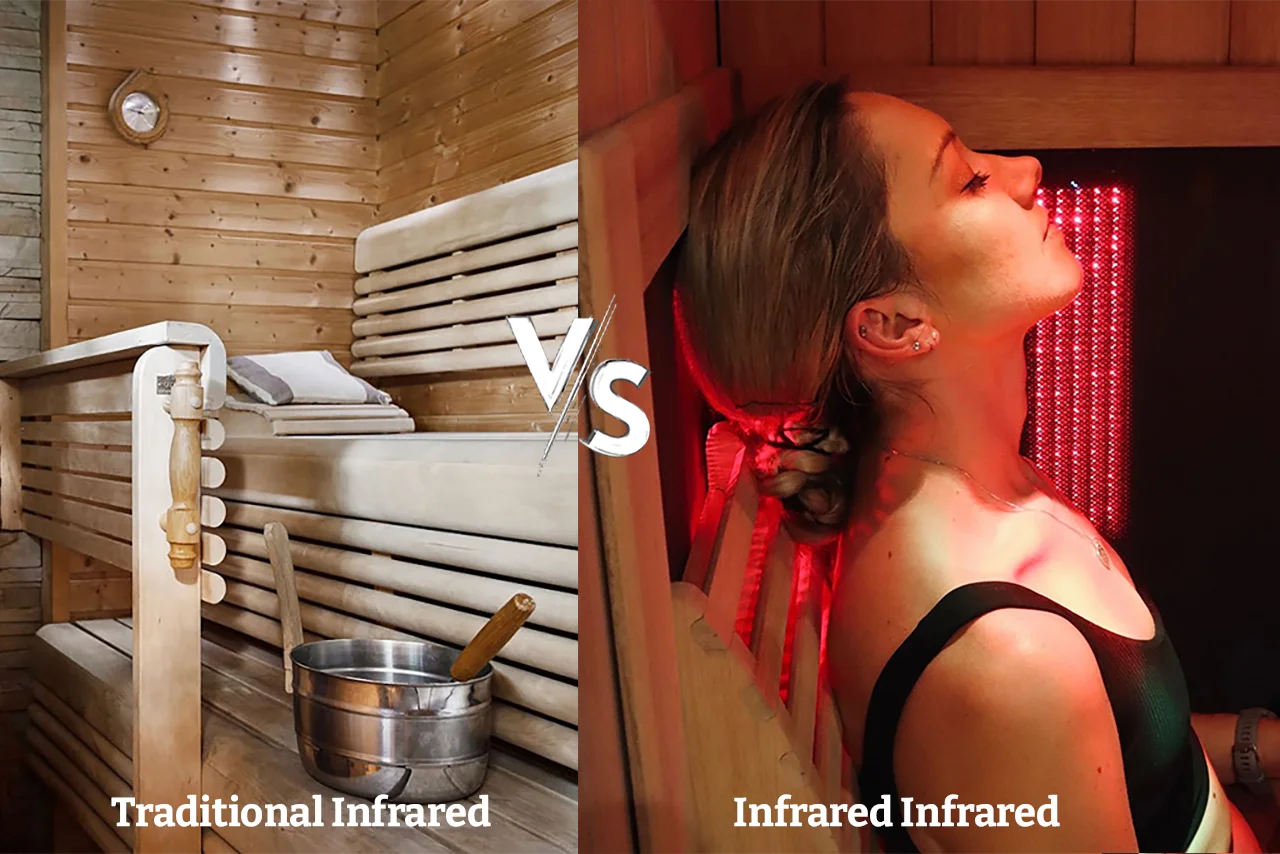
The primary differences between traditional (or conventional) saunas and infrared saunas are mainly how they generate heat and the temperatures they use. Traditional saunas heat the air around you, while infrared saunas use infrared light to heat the body more directly.
- Traditional saunas use wood-fired or electric heaters with stones to heat the air around you, and steam is often created by pouring water over the hot rocks. The hot air raises your skin and core temperature, a process called convection heating. An air temperature of 180–200°F is usually reached, creating an intense experience that can be difficult to sustain for more than 30 to 40 minutes.
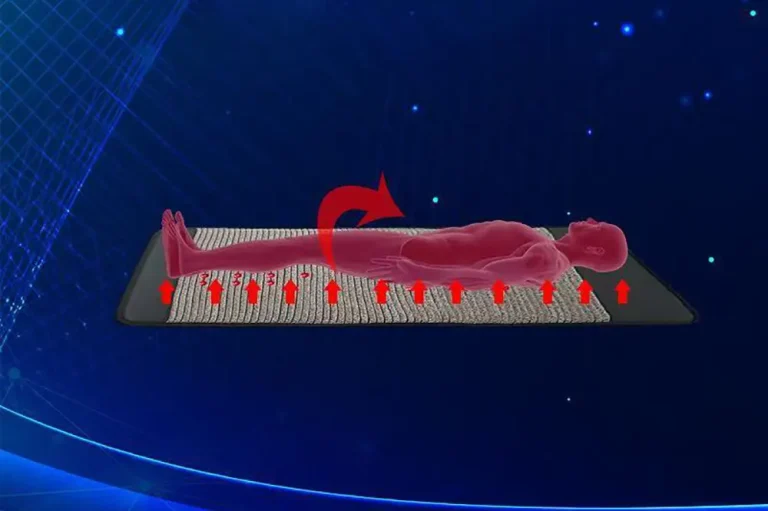
- Infrared saunas work by emitting infrared wavelengths, a type of thermal radiation, which heat the body directly in typically cooler air temperatures (ranging widely from 110°F to 175°F). These light waves can penetrate up to two inches beneath the skin, gently heating muscles and tissues without significantly raising the air temperature. This results in a more comfortable and relaxing experience that promotes deep cellular detoxification, circulation and recovery at lower temperatures.
How Do You Feel: Comparing Sauna Experiences
The experience feels quite different between infrared and traditional saunas, with the latter being much more intense. Infrared may be more comfortable for people who find high heat uncomfortable.
Traditional Sauna Sessions
- Higher heat and steamy create a heavy sweat response
- Sessions are often shorter due to intense temperatures
- Typically tolerable for about 20 minutes at a time
- Can feel challenging for those sensitive to heat
- Pouring water on hot rocks adds to the cultural experience
Infrared Sauna Sessions
- Gentle, dry heat allows for longer sessions
- Deep sweat at lower temperature
- Often used for 40 minutes or more in a single session
- Lower ambient temperature keeps you comfortable
- Energy-efficient and quick to maintain core warmth
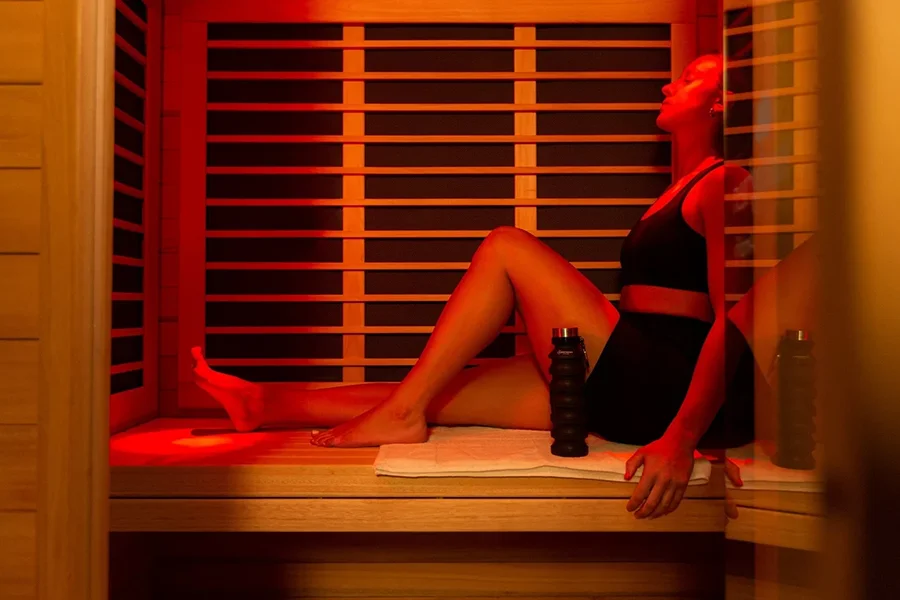
Health Benefits: Traditional vs. Infrared Sauna
Both traditional steam saunas and infrared saunas have been utilised for relaxation, detoxification, and overall well-being. Similar benefits to traditional saunas are offered by infrared saunas, but they are generally considered to be more comfortable and efficient, making them ideal for adding to your daily wellness routine.
Health & Wellness Benefits Both Traditional and Infrared Sauna Help with:
- Relaxation and stress reduction
- Relieve muscle tension and joint pain
- Sweating for healthier-looking skin
- Aids post-activity comfort
- Improved circulation and energy
- Supports healthy sleep patters
There’re Also Many Proven Benefits of Infrared Saunas for Your Health:
- Relieving stress
- Lowering blood pressure
- Relieving muscle and joint pain
- Helping maintain cardiovascular health
- Promote overall mental well-being
Infrared vs. Traditional Sauna: Pros and Cons
Infrared Sauna – Pros and Cons:
PROS:
- More comfortable air temperature
- Can be much more portable
- Cheaper
- Longer sessions
- Easy to install
- More energy efficient
- Penetrates deep below the skin’s surface
CONS:
- No humidity
- Longer time needed in the sauna to sweat
- Some poor quality infrared saunas have high EMFs
One of the most noted advantages of infrared saunas is the dry and pleasant heat that is offered compared with traditional saunas. This makes for a more comfortable experience during longer sessions.
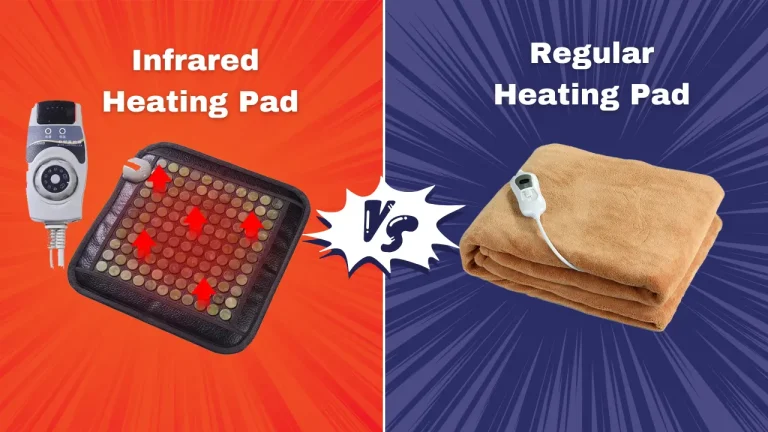
Infrared saunas are available in a variety of forms, including sauna blankets and sauna domes. Their portable design makes them easier to install than traditional saunas, allowing for greater flexibility in terms of placement and movement. You can avoid the potential harms of EMFs by choosing high-quality infrared saunas from a reputable brand like us.

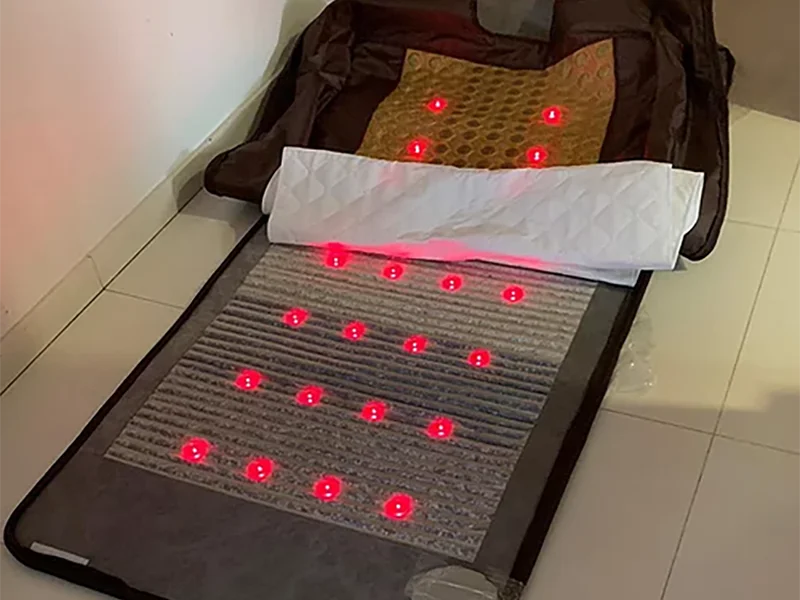
Infrared Sauna Blanket
Stylish, durable and safe infrared sauna blanket that uses infrared heating elements as the heat source, bringing you benefits of infrared sauna blanket in the comfort of your own home.
Infrared Sauna Dome
Ultimate sauna device that combines far infrared heat, PEMF therapy and red light therapy to promote deep relaxation, detoxification and enhanced circulation for full-body wellness.
Infrared saunas are both cost-effective and energy-efficient, and they require less cleaning than traditional saunas.
Perhaps the most significant benefit is the ability of the infrared light to penetrate deep below the skin’s surface, offering profound therapeutic effects. However, it has its drawbacks. Individuals might need to spend a longer time in the sauna to break into a sweat. Some people may not sweat as profusely as they would in a traditional sauna.
Additionally, high levels of EMFs may be emitted by some poor-quality infrared saunas, which may have health implications. If you choose high-quality infrared saunas from a reputable brand like us, you will not have to deal with any harmful effects of EMFs.
Traditional Sauna – Pros and Cons:

PROS:
- Authentic sauna experience
- Can benefit from shorter sessions
- If humid, can have respiratory system benefits
- Some can be made with just hot rocks and water
CONS:
- Much higher air temperature, which can be hard to breathe
- Higher energy costs
- Higher overall price
- May require semi-permanent space
- Difficult to install
Those who prefer a more traditional sauna experience will like the authentic feel of it, especially when some saunas are made with just hot rocks and water. Another advantage is that users can benefit from shorter sessions, which makes it convenient for those pressed for time.
If the sauna is humid, it can also offer respiratory system benefits, which can be especially beneficial for those with respiratory ailments. On the downside, the much higher air temperatures of traditional saunas can make breathing a challenge for some.
In terms of cost, traditional saunas can be pricer and use more energy. Installation can be challenging, as they not only require more space, but also difficult to set up. In some cases, a new power converter or breaker may be required. It is not practical for use at home.
Which is Better, Traditional Sauna or Infrared?
Not sure which type is better to choose an infrared or traditional sauna? Here are a few key questions to consider:
- Which type of heat experience do you prefer – mild or intense? (Infrared is gentler, while traditional saunas are hotter.)
- Will you be using it alone or with other people? (Infrared is more private, whereas traditional is more social.)
- How quickly is it to be heated up? (Infrared takes less time; traditional takes more.)
- Is space and electrical requirements available? (Infrared models are more compact and can be plugged into a standard outlet.)
- Which type of sauna would you prefer – an indoor or outdoor one? (Infrared models are usually for indoor use, while traditional saunas can be either.)
- Regardless of which option you choose, both provide incredible health benefits, so you really can’t go wrong!
Ultimately, the best sauna for you depends on your personal preferences, comfort and lifestyle. Traditional saunas offer a classic, high-heat experience and cultural rituals, while infrared saunas provide efficient, comfortable, and versatile heat therapy that may suit modern living.